







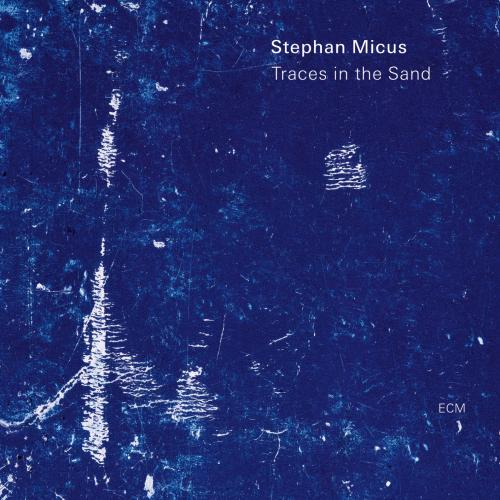
Traces in the Sand Stephan Micus
Album info
Album-Release:
2026
HRA-Release:
13.11.2026
Album including Album cover Booklet (PDF)
I`m sorry!
Dear HIGHRESAUDIO Visitor,
due to territorial constraints and also different releases dates in each country you currently can`t purchase this album. We are updating our release dates twice a week. So, please feel free to check from time-to-time, if the album is available for your country.
We suggest, that you bookmark the album and use our Short List function.
Thank you for your understanding and patience.
Yours sincerely, HIGHRESAUDIO
- 1 The First Light 04:22
- 2 Dancing Cranes 04:07
- 3 The Pearldiver and the Mermaid 06:47
- 4 Another Day at Sea 03:25
- 5 For Layla and Majnun 04:47
- 6 When You Are Near 03:36
- 7 Brother Dolphin 03:29
- 8 Light on Water 07:34
- 9 Swimming with Turtles 04:04
- 10 Far Horizon 09:35
Info for Traces in the Sand
Dedicated to the sea who carries all music within her.
Stephan Micus is an extraordinary musical traveller, collecting instruments around the world and then making his unique musical compositions from them. This album features a dozen instruments from Borneo, Japan, India, Armenia, Ethiopia, Tanzania, Mozambique, Botswana, Morocco, Ireland, Switzerland and Bavaria. Celebrating the richness of the sea, it’s his 27th solo album for ECM.
“I go almost every day to the beach and swim, throughout the year. Working on my music - often three months on a four-minute piece - needs a lot of concentration. To focus totally on a composition necessarily narrows down your perception. So when I go to the sea and see this wide expanse of water and a big horizon it is like an incredible medicine. Wide spaces have always fascinated me, and I try to incorporate them in my music. In this context the sea has been an invaluable teacher.”
Stephan Micus, born in Bavaria but resident in Mallorca for over 30 years, composes music for instruments he’s collected from all over the world. This album features a dozen instruments from Borneo, Japan, India, Armenia, Ethiopia, Tanzania, Mozambique, Botswana, Morocco, Ireland, Switzerland and Bavaria. Celebrating the richness of the sea, it’s his 27th solo album for ECM.
Traces in the Sand opens with rhythmic flourishes on the steelpan-like hang and African kalimbas (thumb pianos) - almost like waves on a beach. These percussion instruments create a vigorous background for the two melodic instruments, Japanese shakuhachi and Armenian duduk. The shakuhachi is higher pitched than the duduk, but both have a characteristic breathy tone. Their melodies intertwine over the continuously shifting background - which occasionally becomes a foreground.
Many of the pieces on this album feature instruments which begin in a dialogue and then finally come together at the end. That’s true also of the Indian cane flutes of ‘Dancing Cranes’ played over an accompaniment of a kalimba from Mozambique. Actually it’s one cane flute overdubbed, but the first one played in a lower octave than the second. Their melodies alternate at first but after four turns they start playing simultaneously.
The technical name for the kalimba is a lamellophone, which comprises metal tongues attached to a resonator. They are known by different names in various parts of sub-Saharan Africa - mbira, kalimba, sanza, and so on. On this album Micus uses kalimbas he has collected in Ethiopia, Tanzania, Mozambique and Botswana.
The titles of some of the tracks reflect this notion of two characters or instruments meeting, for instance ‘The Pearl Diver and the Mermaid’ in which a plucked sapeh duets with the reedy duduk. The sapeh is a beautiful lute from Borneo, with five metal strings, carved from a single piece of wood.
‘Another Day at Sea’ and ‘Brother Dolphin’ are related tracks using the same simple combination of kalimba with the gentle addition of Irish bodhran drum and plucked Moroccan genbri, but these are just softly adding a touch of bass. The kalimba seems to evoke the flashes of light glittering on the surface of the sea.
Micus has always been influenced by the natural world and his music has been inspired by deserts, forests, thunder and more. Traces in the Sand doesn’t attempt to depict the sea, but reflects on the feelings its continually changing state evokes.
‘For Layla and Majnun’ is another piece that brings two characters together, this time the ill-fated lovers of Middle Eastern legend. Here the two characters are represented by the highly contrasted sounds of plucked sapeh and bowed dilruba with its strong and vigorous tone.
The duduk solo that follows is like a moment of reflection, a kind of meditation. The duduk usually has a melancholy tone, but that’s only partly true here and the way Micus plays it sounds nothing like the way it’s played in Armenia. “Actually I try to do something different with all my instruments,” says Micus. “To play the duduk as the Armenians do, doesn’t make any sense for a German. Automatically my duduk playing is different because I have this background of other wind instruments - like shakuhachi and ney. It’s not so much a conscious effort, it’s just the way it comes out from me.”
A new sound emerges in ‘Light on Water’, the Japanese sho, a free reed mouth-organ with 17 pipes. The combination of instruments here - three sho, three bowed dilruba and two duduk creates an extraordinary sound. And, as with most of Micus’ tracks, a combination that hasn’t been heard before.
The closing piece, ‘Far Horizon’ seems to offer a more distant perspective with alternating solos on plucked sapeh and the reedy duduk. With his cast of 12 instrumental characters, Micus brings us an endlessly changing and surprising vision of the ocean and in a way that only he could do it.
Stephan Micus, hang, kalimba, shakuhachi, duduk, Indian crane flutes, sapeh, Bavarian zither, bodhran, genbri, dilruba, shō, chord zither
Recorded 2023-25 at MCM Studios

Stephan Micus
Born in 1953 in Germany, Stephan Micus made his first journey to the Orient at the age of sixteen. Fascinated by the variety of musical cultures around the world Micus has travelled in virtually every Asian and European country as well as in Africa and the Americas. Studying with local master musicians he learned to play numerous traditional instruments, many of them unknown in the Western world. However, Micus‘s intention is not to play these instruments in a traditional manner, but rather to develop the fresh musical possibilities which he feels are inherent in them. In many of his compositions, which he performs himself, he combines instruments that have never before been played together. The resulting dialogues further reflect his vision of a transcultural music.
In addition to his exclusively acoustic instruments Micus also uses his voice, at times – with multitrack recording techniques – creating whole choral pieces by himself. The words he sings usually do not carry any known meaning. However, on Athos and Panagia he set to music ancient Greek prayers to the Virgin Mary, on Desert Poems he performed two original poems in English and on Life he has set to music an ancient Japanese Koan.
Many of Europe’s leading dance companies have chosen his work for their productions. He has performed hundreds of solo concerts over the last 30 years throughout Europe, Asia and the Americas.
He has studied a variety of instruments including guitar, concert-flute, sitar in Benares (India), flamenco guitar in Granada (Spain), shakuhachi (Japanese bamboo flute) and sho (Japanese mouth organ) in Kyoto (Japan), suling (Balinese flute) in Ubud (Bali), Uillean pipes in Carna (Ireland), sinding (African harp) in Gambia, dondon (talking drum) in Accra (Ghana), doussn’ gouni (African harp) in Bamako (Mali), duduki (Georgian oboe) and Georgian polyphonic choral singing in Tbilisi (Georgia), hné (Burmese oboe) in Yangon and Mandalay (Myanmar), duduk (Armenian oboe) in Yerevan (Armenia), bagana (Ethiopian lyre) in Addis Abeba, nohkan (flute of the noh theatre) in Kyoto (Japan), Bulgarian polyphonic choral singing in Plovdiv (Bulgaria), genbri (bass lute of the gnaoua) in Essaouira (Morocco), ryuteki (flute of the gagaku orchestra) in Kyoto (Japan), tama (talking drum) in Kafountine (Senegal), dung chen (Tibetan alphorn) in Kathmandu (Nepal).
In search of musical culture and context Micus has travelled extensively, in particular in India, Japan, Indonesia, Korea, Afghanistan, Morocco, Algeria, Tunisia, Thailand, Egypt, Burma, Sri Lanka, Turkey, USA, Canada, Israel, China, Gambia, Senegal, Nepal, Ladakh, Sinkiang, Venezuela, Tanzania, Argentina, Peru, Ghana, Mali, Jordan, Georgia, Ethiopia, Pakistan, Yemen, Cuba, Lebanon, Laos, Vietnam, Cambodia, Uzbekistan, Kyrgyzstan, Cabo Verde, Mauretania, Armenia, Karabagh, Siberia, Mongolia, Namibia, Iran, Tajikistan, Botswana, Sarawak, Colombia, Mozambique, Ecuador.
Booklet for Traces in the Sand