





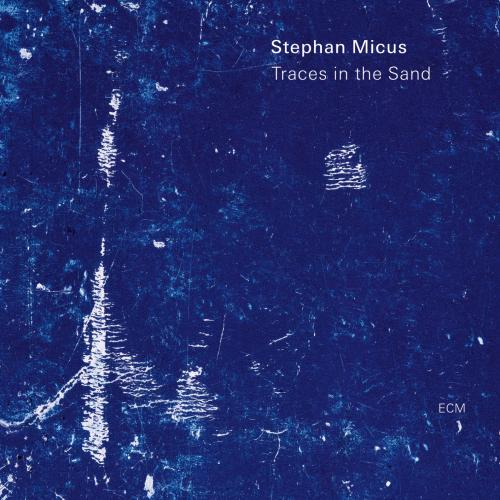
Traces in the Sand Stephan Micus
Album Info
Album Veröffentlichung:
2026
HRA-Veröffentlichung:
13.11.2026
Das Album enthält Albumcover Booklet (PDF)
Entschuldigen Sie bitte!
Sehr geehrter HIGHRESAUDIO Besucher,
leider kann das Album zurzeit aufgrund von Länder- und Lizenzbeschränkungen nicht gekauft werden oder uns liegt der offizielle Veröffentlichungstermin für Ihr Land noch nicht vor. Wir aktualisieren unsere Veröffentlichungstermine ein- bis zweimal die Woche. Bitte schauen Sie ab und zu mal wieder rein.
Wir empfehlen Ihnen das Album auf Ihre Merkliste zu setzen.
Wir bedanken uns für Ihr Verständnis und Ihre Geduld.
Ihr, HIGHRESAUDIO
- 1 The First Light 04:22
- 2 Dancing Cranes 04:07
- 3 The Pearldiver and the Mermaid 06:47
- 4 Another Day at Sea 03:25
- 5 For Layla and Majnun 04:47
- 6 When You Are Near 03:36
- 7 Brother Dolphin 03:29
- 8 Light on Water 07:34
- 9 Swimming with Turtles 04:04
- 10 Far Horizon 09:35
Info zu Traces in the Sand
Gewidmet dem Meer, das alle Musik in sich trägt.
Stephan Micus ist ein außergewöhnlicher musikalischer Reisender, der Instrumente aus aller Welt sammelt und daraus seine einzigartigen Kompositionen formt. Dieses Album vereint ein Dutzend Instrumente aus Borneo, Japan, Indien, Armenien, Äthiopien, Tansania, Mosambik, Botswana, Marokko, Irland, der Schweiz und Bayern. Als Feier der Vielfalt des Meeres ist es sein 27. Soloalbum für ECM.
Micus war stets von der Natur beeinflusst; seine Musik wurde von Wüsten, Wäldern, Donner und vielem mehr inspiriert. Traces in the Sand versucht nicht, das Meer darzustellen, sondern reflektiert die Gefühle, die sein sich ständig wandelnder Zustand hervorruft.
„Sich völlig auf eine Komposition zu konzentrieren, verengt zwangsläufig die Wahrnehmung“, sagt Micus. „Wenn ich dann ans Meer gehe und diese weite Wasserfläche und den großen Horizont sehe, ist das wie eine unglaubliche Medizin. Weite Räume haben mich schon immer fasziniert, und ich versuche, sie in meine Musik zu integrieren. In diesem Zusammenhang war das Meer ein unschätzbarer Lehrmeister.“
Stephan Micus, Hang, Kalimba, Shakuhachi, Duduk, indische Kranichflöten, Sapeh, bayerische Zither, Bodhrán, Gimbri, Dilruba, Shō, Akkordzither
Aufgenommen 2023–25 in den MCM Studios

Stephan Micus
Born in 1953 in Germany, Stephan Micus made his first journey to the Orient at the age of sixteen. Fascinated by the variety of musical cultures around the world Micus has travelled in virtually every Asian and European country as well as in Africa and the Americas. Studying with local master musicians he learned to play numerous traditional instruments, many of them unknown in the Western world. However, Micus‘s intention is not to play these instruments in a traditional manner, but rather to develop the fresh musical possibilities which he feels are inherent in them. In many of his compositions, which he performs himself, he combines instruments that have never before been played together. The resulting dialogues further reflect his vision of a transcultural music.
In addition to his exclusively acoustic instruments Micus also uses his voice, at times – with multitrack recording techniques – creating whole choral pieces by himself. The words he sings usually do not carry any known meaning. However, on Athos and Panagia he set to music ancient Greek prayers to the Virgin Mary, on Desert Poems he performed two original poems in English and on Life he has set to music an ancient Japanese Koan.
Many of Europe’s leading dance companies have chosen his work for their productions. He has performed hundreds of solo concerts over the last 30 years throughout Europe, Asia and the Americas.
He has studied a variety of instruments including guitar, concert-flute, sitar in Benares (India), flamenco guitar in Granada (Spain), shakuhachi (Japanese bamboo flute) and sho (Japanese mouth organ) in Kyoto (Japan), suling (Balinese flute) in Ubud (Bali), Uillean pipes in Carna (Ireland), sinding (African harp) in Gambia, dondon (talking drum) in Accra (Ghana), doussn’ gouni (African harp) in Bamako (Mali), duduki (Georgian oboe) and Georgian polyphonic choral singing in Tbilisi (Georgia), hné (Burmese oboe) in Yangon and Mandalay (Myanmar), duduk (Armenian oboe) in Yerevan (Armenia), bagana (Ethiopian lyre) in Addis Abeba, nohkan (flute of the noh theatre) in Kyoto (Japan), Bulgarian polyphonic choral singing in Plovdiv (Bulgaria), genbri (bass lute of the gnaoua) in Essaouira (Morocco), ryuteki (flute of the gagaku orchestra) in Kyoto (Japan), tama (talking drum) in Kafountine (Senegal), dung chen (Tibetan alphorn) in Kathmandu (Nepal).
In search of musical culture and context Micus has travelled extensively, in particular in India, Japan, Indonesia, Korea, Afghanistan, Morocco, Algeria, Tunisia, Thailand, Egypt, Burma, Sri Lanka, Turkey, USA, Canada, Israel, China, Gambia, Senegal, Nepal, Ladakh, Sinkiang, Venezuela, Tanzania, Argentina, Peru, Ghana, Mali, Jordan, Georgia, Ethiopia, Pakistan, Yemen, Cuba, Lebanon, Laos, Vietnam, Cambodia, Uzbekistan, Kyrgyzstan, Cabo Verde, Mauretania, Armenia, Karabagh, Siberia, Mongolia, Namibia, Iran, Tajikistan, Botswana, Sarawak, Colombia, Mozambique, Ecuador.
Booklet für Traces in the Sand