


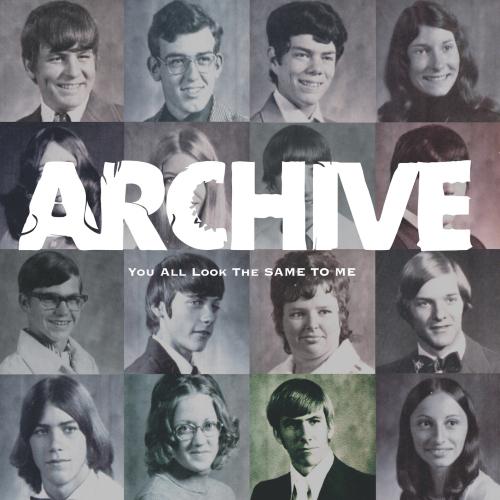
You All Look The Same To Me (2024 Remastered Deluxe Edition) Archive
Album info
Album-Release:
2024
HRA-Release:
03.01.2025
Album including Album cover
- 1 Again (2024 Remaster) 16:19
- 2 Numb (2024 Remaster) 05:46
- 3 Meon (2024 Remaster) 05:43
- 4 Goodbye (2024 Remaster) 05:38
- 5 Now & Then (2024 Remaster) 01:22
- 6 Seamless (2024 Remaster) 01:43
- 7 Finding It So Hard (2024 Remaster) 15:33
- 8 Fool (2024 Remaster) 08:28
- 9 Hate (2024 Remaster) 03:43
- 10 Need (2024 Remaster) 02:28
- 11 My Last (2024 Remaster) 05:13
- 12 Personal Army (2024 Remaster) 05:59
Info for You All Look The Same To Me (2024 Remastered Deluxe Edition)
Released in 2002, You All Look The Same To Me is the third studio album from British group Archive. It was a critical point in their career, seeing them leave their original trip-hop influenced sound behind and embrace something more influenced by prog and post-rock. For fans of bands like Mogwai and Secret Machines.
It is now 22 years since the British musicians' collective Archive freed themselves from the far too tight corset of trip hop with “You All Look The Same To Me”. From then on, the project led by the two creative minds Darius Keeler and Danny Griffiths was often mentioned in the same breath as other experimental bands of the time. Just like Radiohead, Sigur Rós, Mogwai or Godspeed You! Black Emperor, Archive were suddenly categorized as either progressive rock, art rock or the newly created term new art rock. The 16-minute long track 'Again' in particular left many listeners of progressive music open-mouthed, with the result that Archive - alongside Porcupine Tree - were already being treated by some journalists as the new legitimate successors to Pink Floyd. “Grand Vizier” Sal Pichireddu assessed ‘You All Look The Same To Me’ somewhat more cautiously and realistically in his review for our predecessor medium ‘Progressive Newsletter’ at the time, and he was right to do so:
One of the most important albums of the year, because it gave the ossifying scene an impulse from the outside and at the same time could win new friends for elaborate rock music.
However, “You All Look The Same To Me” with Craig Walker's characteristic melancholy voice not only made waves in prog circles; Archive even made it into the mass media with their crossover of alternative rock, trip-hop and art rock, so that the track 'Again' in particular still appears in the soundtracks of various television productions today. Two years later, “Noise” was released, an album that took a similar musical direction. Still attributable to prog or art rock, Keeler and Griffiths departed even further from trip-hop with album number four and moved closer and closer to alternative rock, which former colleague Kristian Selm described as follows in his review of the album:
The sound games have become less, technoid pounding rhythms have almost completely disappeared, the hypnotic, atmospheric parts no longer have the obvious presence. What has remained is the skillful interplay of very quiet numbers and rockier, slowly developing material. However, the rock component is more pronounced this time, with guitar and broken sounds much more in the foreground, giving the album a modern alternative rock feel.
To this day, “You All Look The Same To Me” and “Noise” are Archive's most popular long-playing records in the prog scene, which is probably primarily due to the fact that Keeler and Griffiths continued to develop their style with each new album in the following years. However, personnel changes in the collective also led to discontent in the scene: while Craig Walker's vocals on 2006's “Lights” were sorely missed by many, the renewed involvement of rapper Rosko John, who had already appeared on the '96 debut “Londinium”, caused great irritation on the concept album “Controlling Crowds”. Archive's approach was simply too progressive to be permanently categorized as progressive rock. However, this did not change the fact that “Noise” and especially “You All Look The Same To Me”, but also “Controlling Crowds”, still have a high status today, both among Archive fans and in the prog scene, despite Rosko's rap interludes.
Craig Walker, vocals
Danny Griffiths, guitar, harmonica, percussion
Darius Keeler, bass, programming
Additional musicians:
Pete Barraclough, guitar
Steve Harris, guitar
Dominic Brown, guitar
Lee Pomeroy, bass
Smiley, drums
Steve Emney, drums
Annelise Truss, viola & violin
Maria Q, vocals
Jane Wall, vocals
Steve "Keys" Watts, Hammond, Rhodes
Carl Holt, trumpet
Alan Glen, harmonica
Tom Brazelle, harmonica
Anita Hill, guest triangalist
Digitally remastered
Archive
was founded in London in 1994 by Darius Keeler and Danny Griffiths. The two musicians came from the electronic underground scene of the early 1990s and were heavily influenced by the trip hop wave from Bristol.
While acts such as Massive Attack and Portishead set the tone, Keeler and Griffiths sought their own approach to this new, dark sound combining hip-hop, electronica and orchestral elements from the outset.
For their debut album, they brought singer Roya Arab and rapper Rosko John into the studio. The result, Londinium, was released in 1996 on Island Records and is still considered an underrated classic of the genre. The mixture of atmospheric electronics, strings and political lyrics was well received by critics, but only found a small audience. After the album, Arab and Rosko John left the band, prompting Archive to reform – a dynamic that would continue throughout the band's history.
With their second album, Take My Head (1999), Archive underwent a radical stylistic change. Suzanne Wooder took over on vocals, and the sound was significantly more melodic, accessible and pop-oriented than on the debut.
ARCHIVE - YOU MAKE ME FEEL
Songs such as ‘You Make Me Feel’ (currently featured in the new Renault advert) attracted greater attention, especially in France and Germany. Despite their success, this phase was also only a snapshot. Wooder left the band, Keeler and Griffiths retreated back into the studio and developed the sound that would shape Archive in the long term: an epic, cinematic sound architecture that combined electronic elements with post-rock, prog and orchestral arrangements.
In 2002, You All Look The Same To Me was released, which is still considered one of their most important albums. With Irish singer Craig Walker, the band found a voice that perfectly complemented their new sound. The 16-minute opener ‘Again’ became the band's signature track, while songs like “Numb” and ‘Meon’ combined melancholic melodies with sprawling arcs of tension. During this phase, Archive evolved from a studio project into a permanent live band that quickly gained a growing fan base, especially in France and Eastern Europe.
The following albums, Noise (2004) and Lights (2006), consistently continued along the same path. Noise was dominated by a dark, almost aggressive mood. The song ‘Fuck U’ became one of their best-known tracks – dark, vulnerable, intense. Lights relied more heavily on electronic textures, complex song structures and atmospheric arcs of tension. During this period, Archive established themselves as a fixture in the European scene without ever slipping into the mainstream.
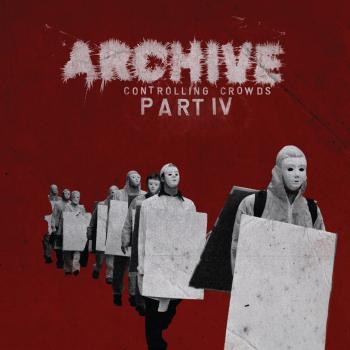
With Controlling Crowds, a concept album released in four parts in 2009, the band reached a creative peak. The first release consisted of parts I to III, with part IV following a few months later. The entire work is characterised by a dark analysis of society, in which themes such as surveillance, alienation and digital control are central. The tracks oscillate between electronic minimalism and monumental opulence. Archive presented themselves here as a musical collective in which changing voices, timbres and moods were woven into a dense overall concept.
Archive - The Empty Bottle (Official Video)
After Craig Walker left, Rosko John rejoined the band. On the 2012 album With Us Until You're Dead, he took over vocals alongside Maria Q, Dave Pen and Pollard Berrier. This album also focused heavily on thematic coherence, but avoided simple song structures in favour of building tension and atmosphere. The band sounded more focused and at the same time more experimental than ever before.
2014 saw the release of Axiom, a project that was somewhere between a soundtrack and an album. The music was written in parallel with a short film that further explored the band's visual dimension. Archive had always thought of music and images as a whole, and with Axiom, this principle was consistently implemented. The film was performed live with the music at selected concerts, underlining the band's ambitions beyond classic album formats.
With Restriction (2015), Archive presented a politically charged album that increasingly opened up to danceable rhythms without abandoning their typical emotional depth. Tracks such as ‘Kid Corner’ and ‘Ruination’ addressed social issues that were to become even more acute in the following years.
This album contains no booklet.