





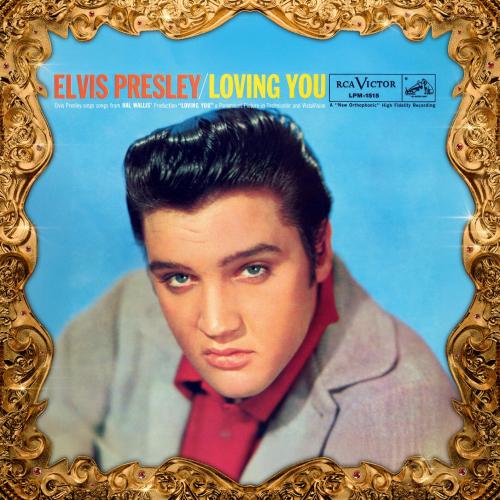
Loving You (Mono Remastered) Elvis Presley
Album info
Album-Release:
1957
HRA-Release:
19.02.2026
Album including Album cover
I`m sorry!
Dear HIGHRESAUDIO Visitor,
due to territorial constraints and also different releases dates in each country you currently can`t purchase this album. We are updating our release dates twice a week. So, please feel free to check from time-to-time, if the album is available for your country.
We suggest, that you bookmark the album and use our Short List function.
Thank you for your understanding and patience.
Yours sincerely, HIGHRESAUDIO
- 1 Mean Woman Blues 02:15
- 2 (Let Me Be Your) Teddy Bear 01:48
- 3 Loving You 02:12
- 4 Got a Lot O' Livin' to Do! 02:31
- 5 Lonesome Cowboy 03:01
- 6 Hot Dog 01:12
- 7 (Let's Have A) Party 01:26
- 8 Blueberry Hill 02:39
- 9 True Love 02:05
- 10 Don't Leave Me Now 02:05
- 11 Have I Told You Lately That I Love You 02:31
- 12 I Need You So 02:37
- 13 Tell Me Why 02:06
Info for Loving You (Mono Remastered)
Loving You from 1957 was Elvis Presley’s first soundtrack and accompanied the eponymous film that follows a delivery man who is discovered by a music publicist and a country–western musician who wants to promote the talented newcomer. This was Presley’s first major starring role. The fact that only the tracks on the A-side appeared in the movie couldn’t spoil the fun for the fans, as the LP contained hits such as “(Let Me Be Your) Teddy Bear” reaching #1 in the U.S., some covers and some lesser-known deep cuts. It’s not without reason that this album reached Certified Gold status. The Midas touch, so to speak.
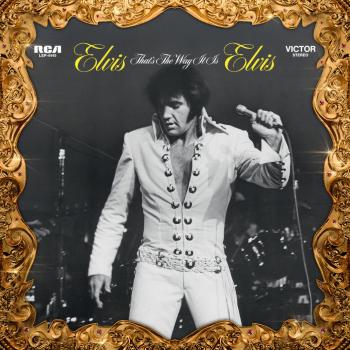
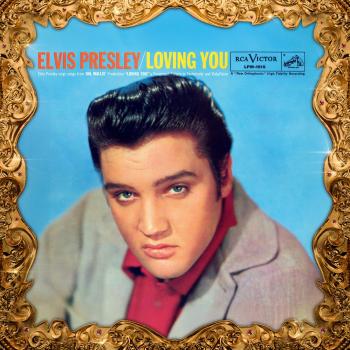
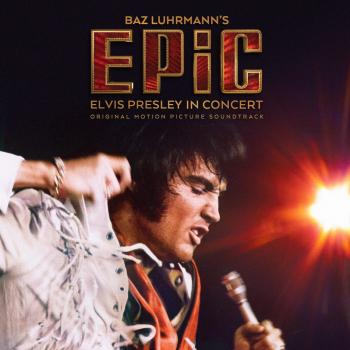
Elvis Presley
was an American actor and singer, born on January 8, 1935, in Mississippi. He played a key role in popularizing rockabilly and later rock ‘n’ roll, and is considered one of the greatest icons of all time. The King, who died on August 16, 1977, remains the second-biggest album seller in music history.
A talented and precocious artist
Elvis Aaron Presley was born on January 8, 1935, in Tupelo and showed a passion for music even as a child. At the age of ten, he took part in his first singing competition dressed as a cowboy and came fifth at the Mississippi-Alabama Fair and Dairy Show. On his 11th birthday, his family decided to give him his first guitar as a gift. Two of his uncles took the opportunity to give him guitar lessons, while his mother helped him improve his singing.
In 1946, Elvis Presley met Mississippi Slim, a local musician and radio host who helped him perfect his guitar chords. Seeing that Elvis had talent, Mississippi Slim decided to have him perform on his show, giving him his first public performance even though he wasn't even 12 years old! In 1953, after finishing school, he made the final decision to pursue a career in music.
A determined teenager
True to his dream of becoming a musician, Elvis Presley decided to visit the various record companies in Memphis to record his first single. When he arrived at Sun Records, he paid four dollars of his own money for his first recording! At the age of 18, he sang two cover versions: My Happiness and That's When Your Heartaches Begin.
The beginning of a great career
Elvis Presley then recorded several singles with Scotty Moore and Bill Black, who would later become his musicians. On July 5, 1954, in the middle of recording, Elvis Presley began to accompany his songs with body movements that Sam Philips found overwhelming. Considering these gestures to be a real revolution, the producer of Sun Records decided to launch the trio on the road to success.
The three men performed countless times and embarked on a local tour that lasted until 1955 to make themselves known to a wider audience. The success was huge. Elvis Presley's footwork was considered scandalous, but it attracted young audiences. Elvis Presley's sound, a mixture of blues and country music, was heard throughout the southwestern United States and soon became rockabilly. The group then signed with RCA Records, which created the “Elvis Presley Music” label specifically to record the phenomenon's first studio albums.
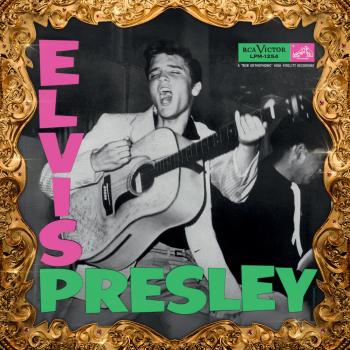
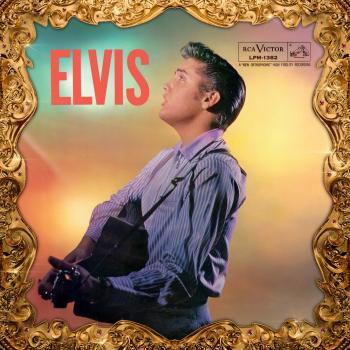
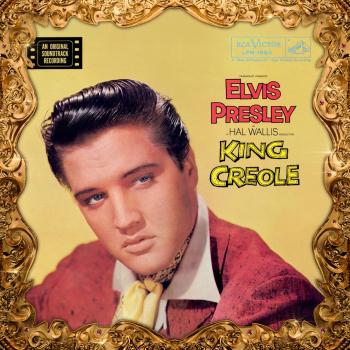
By 1958, Elvis Presley had become increasingly popular thanks to his albums Elvis Presley (1956) and Elvis (1956) and his film soundtracks: Loving You (1957) and the incredible King Creole (1958). After his appearance on The Ed Sullivan Show on September 9, 1956, he became a national star. That evening, 60 million Americans watched Elvis's rendition of Love Me Tender, and over a million copies of the single were pre-ordered after the show.
The King: the birth of a legend
In 1956, Elvis Presley wanted to try his hand at other things and signed a contract with Paramount Pictures to become an actor. Despite mixed reviews, the first films in which Elvis starred were real commercial successes thanks to his fame. He then made several more films, such as Cat on a Hot Tin Roof (1956) and King Creole (1958), before having to complete his military service from 1958 to 1960.
Despite his absence, his producers released the albums For LP Fans Only (1959) and A Date with Elvis (1959), featuring songs recorded years earlier.
In 1960, after returning from the army, he released the albums Something for Everybody (1961) and Pot Luck (1962), before signing an acting contract with Hollywood. The production company was eager to give him the leading roles in the films for which he was to write the soundtrack. He then starred in The Sheriff of These Ladies (1962), The Man for Everything (1964), and Tickle Me (1965).
At the top of the sales charts, despite a career break!
Although he put his music career on hold from 1960 to 1968, Elvis Presley managed to get ten original movie soundtracks to the top of the singles sales charts! These include Girls! Girls! Girls (1962) and Fun in Acapulco (1963).
The year 1968 is also considered symbolic of the King's return to his roots. In the show entitled Elvis, he is celebrated by the audience. The following year, he releases his first album in nine years: From Elvis in Memphis (1969). This album, which features more soul and less rock ‘n’ roll, demonstrates the King's ability to adapt to the musical trends of the time.
Elvis is determined to return to the stage with concerts and signs a contract for 57 dates over several years at the International Hotel in Las Vegas. At the first of these concerts on July 31, 1969, the audience is captivated by his performance and gives him three standing ovations.
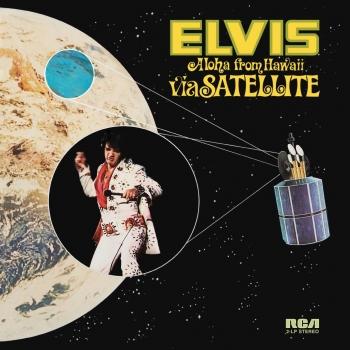
In parallel with the contract with the hotel in Las Vegas, Elvis resumes his tours of the USA and releases seven albums between 1970 and 1973, including Elvis Country (I'm 10,000 Years Old) (1971) and Raised on Rock (1973). In the same year, he decided to give the first concert ever to be broadcast via satellite around the world. This took his career to global dimensions. In his white suit with the eagle on the back, Elvis became The King forever and released a double album: Aloha From Hawaii via Satellite (1973).
Due to excessive medication use, he died of a heart attack on August 16, 1977, in Memphis, the city where it all began.
Elvis Presley's awards:
Elvis Presley received an impressive number of awards throughout his career. In 2010, the total number of albums and singles he sold was estimated at over 600 million! His album Elvis' Christmas Album (1957), for example, went platinum nine times. In total, he received 144 awards for his singles and albums during his career, which spanned just over 20 years.
Elvis is also the American singer who has appeared most frequently in the charts of best-selling singles in the US. He placed 38 singles in the Top 10, 18 at No. 1 and 114 in the Top 40! He also spent more than 80 weeks at the top of the singles bestseller list during his career.
His musical awards include three Grammy Awards for Best Contemporary Christian Music Performance in 1968, 1973, and 1975, as well as a Grammy Award in 1971 for his life's work. Today, he has a star on the Walk of Fame on Hollywood Boulevard and belongs to three major music institutions: the Rock and Roll Hall of Fame, the Country Music Hall of Fame, and the Gospel Music Hall of Fame.
On the evening of Elvis Presley's death, US President Jimmy Carter summed up the singer's life in a now famous sentence: “Elvis may be gone, but his legend will live on forever.”
This album contains no booklet.