




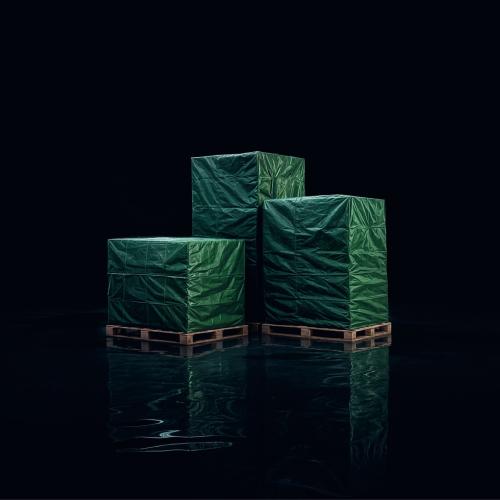
Doublespeak Doublespeak, Vince Clarke, Blancmange, Benge
Album info
Album-Release:
2026
HRA-Release:
29.05.2026
Album including Album cover
I`m sorry!
Dear HIGHRESAUDIO Visitor,
due to territorial constraints and also different releases dates in each country you currently can`t purchase this album. We are updating our release dates twice a week. So, please feel free to check from time-to-time, if the album is available for your country.
We suggest, that you bookmark the album and use our Short List function.
Thank you for your understanding and patience.
Yours sincerely, HIGHRESAUDIO
- 1 Back to Nature 04:33
- 2 Brand New Life 02:58
- 3 The Visitors 04:43
- 4 I Can't Escape Myself 03:19
- 5 Goodbye to Love 04:29
- 6 Rock On 03:08
- 7 Smoke and Mirrors 03:00
- 8 Day Breaks 03:48
- 9 Gentle on My Mind 03:24
- 10 Richard! 04:56
- 11 End Credits 03:33
Info for Doublespeak
The album sees Vince Clarke, Neil Arthur and Benge revisit eleven of their favourite songs from the past four decades, envisioned through an electronica lens, including picks from The Sound, Young Marble Giants, ABBA, David Essex, The Carpenters, The Magnetic Fields, Ed Dowie and Laptop. "Back To Nature" arrives as the first preview of the collection of songs.
Split between post-punk tracks, unheralded gems and pop classics, with its empathic vocals, bold arrangements and glowing analogue electronics, ‘Doublespeak’ turns familiar and forgotten songs into a personal, forward-looking electronic statement.
Features covers of tracks by Fad Gadget, Young Marble Giants, ABBA, The Sound, Carpenters, David Essex, The Magnetic Fields, Thomas Leer and Robert Rental, John Hartford, Ed Dowie and Laptop.
Speaking about the process of making the Doublespeak, which was developed over the course of seven years, Arthur says: “What’s really stood out for us on this journey is how good these songs are. It’s from doing your own version that you realise what incredible pieces of work they are.”
“I knew so little about some of these songs that they were like demos to me," Clarke adds. "They felt like brilliant new songs that you want to get your hands on. I’ve had people do cover versions of my songs and honestly there’s no better tribute. So that’s what we wanted to do here.”
"For me it was the excitement of hearing these great songs resynthesized into new forms in the studio," Benge continues. "It was such an honour to be part of it.”
Doublespeak
Doublespeak
unites Erasure’s Vince Clarke, Blancmange’s Neil Arthur and synth auteur Benge for a synth-driven reinvention of eleven songs spanning four decades. Split between post-punk gems and pop classics, the album reframes songs from artists as diverse as Young Marble Giants to ABBA. Empathic vocals, bold arrangements and analogue electronics turn familiar forgotten songs into a personal.
Vince Clarke
one of British synth-pop’s founding fathers – chats to Anita Awbi about circuit boards, collaborations and creativity...
Through his groundbreaking work with Depeche Mode, Yaz, and finally Erasure, the mercurial Vince Clarke was among the driving forces behind the rise and continued vitality of the synth pop movement, his work proving an enormous influence on the subsequent emergence of electronica. Born July 3, 1960, in South Woodford, England, Clarke was raised in nearby Basildon, initially studying the violin before moving on to piano. In 1976, he teamed with schoolmate Andrew Fletcher to form No Romance in China; the duo proved short-lived and by 1979, Clarke had formed French Look, another two-piece featuring guitarist/keyboardist Martin L. Gore. Fletcher soon signed on and the group rechristened itself Composition of Sound; although Clarke initially handled vocal chores, in 1980 singer David Gahan was brought in to complete the lineup and after one final name change to Depeche Mode, the quartet jettisoned all instruments, excluding their synthesizers, honing a slick, techno-based sound to showcase Clarke’s catchy melodies. Although Depeche Mode’s 1981 debut LP Speak and Spell became a major hit, buoyed by the single “Just Can’t Get Enough,” Clarke left the lineup soon after the record’s release; in his absence, Gore assumed songwriting duties and the group slowly achieved international stardom in the years to follow.
Clarke, meanwhile, formed Yazoo (shortened to simply Yaz for U.S. consumption) with singer Alison Moyet; the duo’s 1982 debut Upstairs at Eric’s reached the number two spot on the U.K. charts while the follow-up, You and Me Both, hit number one. However, after just a year and half together, Clarke and Moyet parted ways, with the latter pursuing a solo career; Clarke then teamed with ex-Undertones frontman Feargal Sharkey just long enough to issue the single “Never Never” as the Assembly, followed by a collaboration with Paul Quinn for the 1985 single “One Day.” That same year, Clarke placed a blind ad for a singer in a British music weekly; Andy Bell was selected from a pool of over 40 applicants and Erasure was born. The duo proved the most enduring of Clarke’s projects, although their 1986 debut Wonderland was a commercial and critical disappointment. With 1988’s The Innocents, Erasure scored a pair of American pop hits, “Chains of Love” and “A Little Respect.” While both 1989’s Wild! and 1991’s Chorus topped the British charts, the advent of grunge minimized dance-pop’s immediate appeal and subsequent outings appeared to little notice. In 1999, Clarke teamed with fellow synth pop pioneer Martyn Ware as the Clarke & Ware Experiment, issuing the album Pretentious. Erasure’s Vince Clarke followed two years later. A collaborative effort with Heaven 17’s Martyn Ware, Spectrum Pursuit Vehicle, appeared in spring 2001.
This album contains no booklet.