



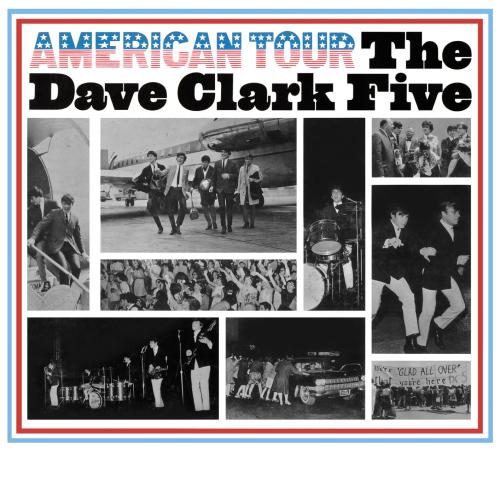
American Tour (Remastered 2019) The Dave Clark Five
Album info
Album-Release:
2019
HRA-Release:
28.01.2026
Album including Album cover
I`m sorry!
Dear HIGHRESAUDIO Visitor,
due to territorial constraints and also different releases dates in each country you currently can`t purchase this album. We are updating our release dates twice a week. So, please feel free to check from time-to-time, if the album is available for your country.
We suggest, that you bookmark the album and use our Short List function.
Thank you for your understanding and patience.
Yours sincerely, HIGHRESAUDIO
- 1 Because (Remastered 2019) 02:22
- 2 Move On (Remastered 2019) 02:14
- 3 Whenever You're Around (Remastered 2019) 02:54
- 4 I Want You Still (Remastered 2019) 01:37
- 5 Long Ago (Remastered 2019) 02:13
- 6 Blue Monday (Remastered 2019) 02:56
- 7 Sometimes (Remastered 2019) 02:51
- 8 Any Time You Want Love (Remastered 2019) 02:12
- 9 I Cried Over You (Remastered 2019) 02:28
- 10 Ol' Sol (Remastered 2019) 02:00
- 11 At the Scene (Remastered 2019) 01:51
Info for American Tour (Remastered 2019)
For a very brief time in 1964, it seemed that the biggest challenger to the Beatles' phenomenon was the Dave Clark Five. From the Tottenham area of London, the quintet had the fortune to knock "I Want to Hold Your Hand" off the top of the British charts with "Glad All Over," and were championed (for about 15 minutes) by the British press as the Beatles' most serious threat. They were the first British Invasion band to break in a big way in the States after the Beatles, though the Rolling Stones and others quickly supplanted the DC5 as the Fab Four's most serious rivals. The Dave Clark Five reached the Top 40 17 times between 1964 and 1967 with memorable hits like "Glad All Over," "Bits and Pieces," "Because," and a remake of Bobby Day's "Over and Over," as well as making more appearances on The Ed Sullivan Show than any other English act. The DC5 were distinguished from their British contemporaries by their larger-than-life production, Clark's loud stomping drum sound, and Mike Smith's leathery vocals. Though accused by detractors of lacking finesse and hipness, they had a solid ear for melodies and harmonies and wrote much of their early material, the best of which endured quite well. Interestingly, and unusually for that era, bandleader Dave Clark managed and produced the band himself, negotiating a much higher royalty rate than artists of that period usually received. After a couple years of superstardom, the group proved unable to either keep up with the changing times or maintain a high standard of original compositions, and called it quits in 1970.
Dave Clark, drums, backing vocals
Mike Smith, organ, piano, lead vocals
Lenny Davidson, guitars, backing vocals
Rick Huxley, bass, harmonica, backing vocals
Denis Payton, saxophone, backing vocals
Digitally remastered
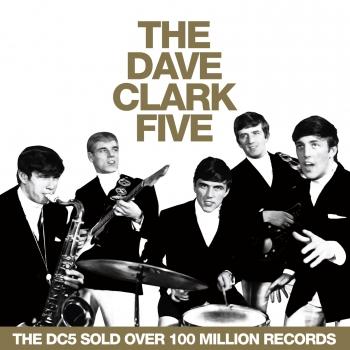
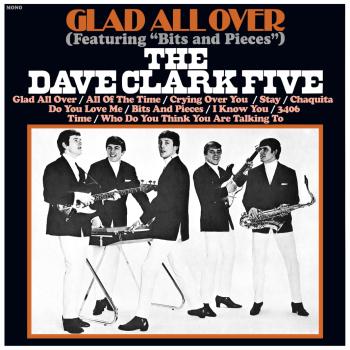
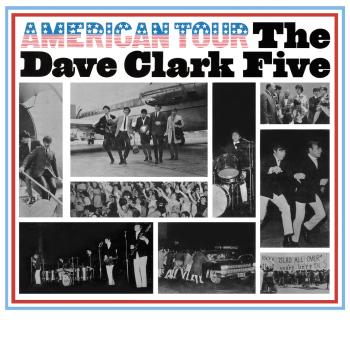
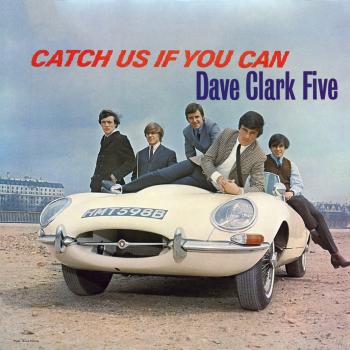
The Dave Clark Five
are usually compared with their British contemporaries, the Beatles. Though clearly not in the same league, they don't deserve to be completely dismissed.
The London based DC5 got together in the early 60's in the hopes of raising money for their football club so they could play some matches on the continent. Forming around drummer Dave Clark, the group featured Mike Smith on keyboards and vocals. By '63, as the Beatles were tearing up England, the DC 5 signed a recording contract. Their first hit was a cover of the Contour's "Do You Love Me" but the big news came months later when "Glad All Over" displaced the Beatles "I Want To Hold Your Hand" at #1. The London press predicted the "Liverpool fad" would be replaced by the Tottenham (DC5's London stomping ground) Sound. It was utter nonsense. "I Want To Hold Your Hand" couldn't stay on top forever. Something had to replace it.
"Catch Us If You Can," "Can't You See That She's Mine" and "Bits and Pieces" were among the DC5's best Rockers. The group, thanks to extensive TV exposure, kept going strong through '66 (a long run in Rock n' Roll years). They even made a decent movie "Having A Wild Weekend."
The other notable thing about the DC5 was Dave Clark himself. Rockers have been consistently cheated out of royalties or made horrendous investments. Both the Beatles and Rolling Stones lost huge sums (even though Mick Jagger was an economics student). But they earned so much the loss wasn't fatal - but pretty close. Lesser bands, usually found themselves broke shortly after the hits stopped. Some even before. Dave Clark owned exclusive rights to his group's recordings and managed them extraordinarily well. When the plug was pulled on the landmark British music show "Ready, Steady, Go!" Clark bought the program rights. The show contained performances by his band and just about every major and minor Rock act from the mid-60's. Doling out the music footage was another Clark moneymaker.
As the late-60's dawned the straight-ahead Rock of the DC5 was woefully out of fashion. Also, the group made some bad song choices. The DC5 were probably the only group with all its members surviving the 60's not to play the revival circuit. The reason was simple; Clark didn't need the money.
This album contains no booklet.