




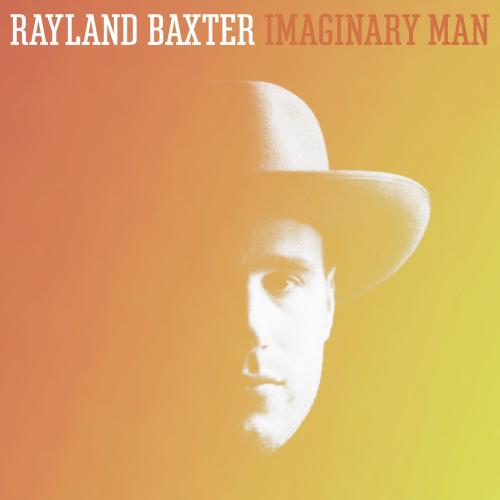
Imaginary Man Rayland Baxter
Album info
Album-Release:
2015
HRA-Release:
05.08.2026
Album including Album cover Booklet (PDF)
- 1 Mr. Rodriguez 03:43
- 2 Oh My Captain 03:35
- 3 Mother Mother 02:36
- 4 Yellow Eyes 03:50
- 5 Rugged Lovers 02:51
- 6 Young Man 03:40
- 7 All In My Head 03:21
- 8 Freakin Me Out 05:33
- 9 Memories of Old Hickory 04:15
- 10 Your Love 03:47
- 11 Lady of the Desert 03:53
Info for Imaginary Man
Imaginary Man follows Baxter’s highly praised debut Feathers & Fishhooks. Of the album, Baxter comments, “To me, Imaginary Man is an audible record of my journey down the bright blue river of imagination. It is a multicolored dream of song, a sonic birdbath if you may. The sounds and songs are as visual as they are tactile and it shows a bit more of who I have become as an artist, as continual and never-ending as that process is.”
"Some might insist that comparing Rayland Baxter to Paul Simon is inappropriate, the likening of a go-kart to a Mercedes. But that would be overly reductive and dismissive of Baxter’s burgeoning talent. Baxter isn’t a carbon copy of Simon, to be sure, but how can anyone listen to “Mr. Rodriguez” and not hear the similarities vocally, musically, poetically?
Setting that comparison aside and looking at Baxter in relation to only his previous work, Imaginary Man represents a sizable leap forward for him. Whereas Feathers & Fishhooks found him wandering through a more rural aesthetic, this effort urbanizes the space with heartier production elements — thick guitars, churning organs, and lush strings echo, gurgle, and swirl through cuts like “Young Man,” “Oh My Captain,” and “Rugged Lovers” giving Baxter’s delicate tenor that much more heft. While the adventurous pieces are certainly fun and lively, offering Baxter grittier spaces in which to roam, it’s the quieter moments (“Rugged Lovers” and “Lady of the Desert,” in particular) that allow his inner romantic to really revel." (Kelly McCartney, kellymccartney.com)
Rayland Baxter
Rayland Baxter
Growing up, Rayland's father Bucky (a multi-instrumentalist for Bob Dylan, Steve Earle and Ryan Adams, among others) made sure music was just a natural part of life, a soundtrack to childhood. One day, while out on a motorcycle trip, Bucky bought his son a guitar: a used, blue electric one. He was in elementary school, no older than third grade.
While he spent much of his teenage years playing sports, by 21 he'd picked up the guitar again. The sound of six strings ringing had always been comforting, only now its draw proved stronger: it was a surprise, perhaps most to Rayland himself, how naturally and harmoniously songs came. Instead of finishing college he moved to the small town of Creede, CO, playing open mics at a taco bar and busking for tips. Later, he took his father's old friend up on an offer to spend some time at his home in Ashkelon, Israel.
"I was supposed to be there for two weeks," he says. "I ended up staying for six months." Life in Ashkelon, a coastal town close to Gaza, involved a cadre of sounds: bombs detonating in the cornfields, sirens going off so frequently that few took notice or cover. Rayland drowned the noise with his host's enormous collection of records and documentaries: Townes Van Zandt, Dylan, Leonard Cohen. "I would spend my days and nights just studying all my favorite people and musicians, and that's when it clicked." One night he couldn't sleep, so he went outside to a barn in the back of the house with his guitar. "When I came back in, I said to my friend, 'I think I wrote a good one out there.'"
He's spent much of his time on tour: with The Civil Wars, who personally invited him to open, as well as Grace Potter & the Nocturnals. Now Rayland lives in a small, crowded house with five people, four chickens, a dog and a fish named Okra near the Nashville fairgrounds. He sleeps in a covered porch with no air conditioning or heat—"like camping," he says, enthusiastically at that. His hometown has played a vital role in shaping him musically. "There is an incredible group of young artists, songwriters, painters and filmmakers here, just a huge community of really rad people. It's been vital to have a great creative group of people I can feed off of all the time."
Rayland's songs are a calming force for anyone looking for change, for love, or wanting to walk in a different direction—because it was his own quest for all those things that motivated the music. "I had nothing to write about until I was 25. I had to live through a lot," he says, "and when I sing I don't hold back. It's an emotional release for me and there's no makeup on it. It puts me at ease, and that's what I hope it will do for those who listen."
Since then, Baxter has become an undeniable creative force in the Nashville music scene, unafraid to dabble in whatever moves him. He’s often tagged as “eccentric,” though he’s not entirely sure what that means. “What does it mean to you?” he asks. I tell him it means confidence, being comfortable doing what you want to, no matter how unconventional. He ponders for a moment. “I mean, I’ve always tried to live in dreamland since I was a kid,” he says. “Being an oddball and outside of the societal norms [helps me] make music with no borders. That’s all I’m trying to do.”
Booklet for Imaginary Man