


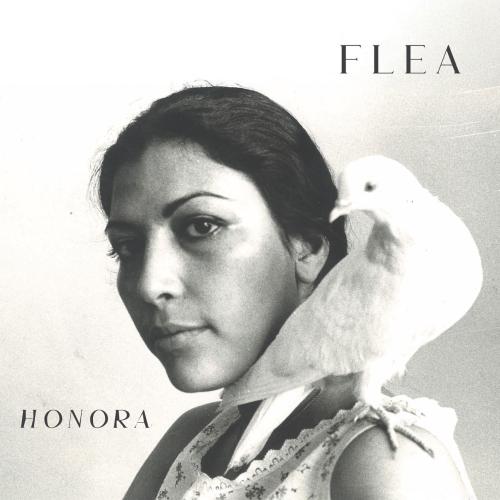
Honora Flea
Album Info
Album Veröffentlichung:
2026
HRA-Veröffentlichung:
27.03.2026
Das Album enthält Albumcover
Entschuldigen Sie bitte!
Sehr geehrter HIGHRESAUDIO Besucher,
leider kann das Album zurzeit aufgrund von Länder- und Lizenzbeschränkungen nicht gekauft werden oder uns liegt der offizielle Veröffentlichungstermin für Ihr Land noch nicht vor. Wir aktualisieren unsere Veröffentlichungstermine ein- bis zweimal die Woche. Bitte schauen Sie ab und zu mal wieder rein.
Wir empfehlen Ihnen das Album auf Ihre Merkliste zu setzen.
Wir bedanken uns für Ihr Verständnis und Ihre Geduld.
Ihr, HIGHRESAUDIO
- 1 Golden Wingship 01:01
- 2 A Plea 07:38
- 3 Traffic Lights (feat. Thom Yorke) 05:41
- 4 Frailed 10:50
- 5 Morning Cry 03:31
- 6 Maggot Brain 04:52
- 7 Wichita Lineman (feat. Nick Cave) 04:22
- 8 Thinkin Bout You 04:10
- 9 Willow Weep for Me 03:53
- 10 Free As I Want to Be 05:13
Info zu Honora
After a nearly five-decade (and counting) career as one of his generation's defining rock bassists, Flea releases his first full-length solo album, "Honora".
A New Direction Rooted in Jazz: For Honora, which takes its name from a beloved family member, Flea composed and arranged the music, and also plays trumpet and bass throughout, joined by an elite crew of modern jazz visionaries: album producer and saxophonist Josh Johnson, guitarist Jeff Parker, bassist Anna Butterss, and drummer Deantoni Parks. The record features vocals from Flea, as well as friends Thom Yorke and Nick Cave. Mauro Refosco (David Byrne, Atoms for Peace) and Nate Walcott (Bright Eyes), among others, also join the band. The album comprises six original songs–including one co-written by Flea, Johnson, and Yorke–as well as interpretations of tunes by George Clinton and Eddie Hazel, Jimmy Webb, Frank Ocean and Shea Taylor, and Ann Ronell.
"Deantoni and I played what became 'Traffic Lights' the first day. Something about it reminded me of Atoms for Peace, so I sent it to Thom. Just knowing him, I thought it would be a rhythm and a sensibility that he would relate to. And I was right, he did. With a gorgeous melody and the words, you know, about living in the 'upside down' and how do you make sense of things when we're getting all this fake shit and real shit? Everyone has their ways of dealing with the world. But he's just the warmest, free flowing, jamming motherf*cker." (Flea)
Best known as a founding member and bassist for the Red Hot Chili Peppers, Flea was first introduced to live jazz as a child, when family friends played the music together in his own living room. "It was the greatest thing I ever saw," he recalls. "The wildness, warmth and we of it. Straight Bebop. Boom. I knew there were higher things on this earth, way above the pettiness that had left me disheartened. The holy trifecta of my life, music, sports and nature was complete."
Though he dreamed of being like his heroes Dizzy Gillespie, Miles Davis, and Clifford Brown, Flea's path went a different direction: His close friend Hillel Slovak asked him to pick up the bass and join his rock band when he was sixteen, leading Flea into a decades-long career with the hugely successful Chili Peppers.
But late one night in 1991, in the midst of that band's ascent, Flea was acting in the now-classic Gus Van Sant film My Own Private Idaho when he shared with a friend, "I want to make an instrumental record with deep hypnotic grooves, trippy melodies layered on top, meditations on a groove." The caveat was that he first needed to get his trumpet-playing together.
As Flea neared his sixtieth birthday, he realized if he did not pick up the trumpet again, he probably never would. So he resolved to practice every day for two years–in the midst of a stadium tour with Red Hot Chili Peppers, with a wife and newborn at home. At the end of those two years, he would make an album, regardless of where his knowledge or talents ended up.
Until Honora, Flea had never been scared of making music before. He worried that the all-star band he had assembled would think he was "a non-playing motherf*cker, charlatan, rock poseur or fan." But, he says, "It turns out they were all the most genuinely supportive people, moving me deeply and daily with their generous spirits…Sitting in a room and playing the music with them made me feel like I was on drugs. I was buzzing, tripping and floating around the studio. I love them, they truly gave of themselves. I bow all the way down."
Flea, lead vocals, bass, trumpet
Additional musicians:
Thom Yorke, lead vocals, piano, synthesizer (track 3)
Nick Cave, lead vocals (track 7)
Mauro Refosco, percussion
Nathaniel Walcott, trumpet, keyboards
Josh Johnson, saxophone, synthesizer, piano, backing vocals
Jeff Parker, guitar, backing vocals
Anna Butterss, double bass, backing vocals
Deantoni Parks, drums, backing vocals
Chris Warren, backing vocals
Ricky Washington, alto flute
Vikram Devasthali, trombone
Michael Peter Balzary aka Flea
the renowned bassist of the Red Hot Chili Peppers, has captivated audiences worldwide with his unique style and captivating bass lines. His talent and musicality have made him an idol for countless musicians, and his contributions to the band’s iconic sound cannot be overstated.
Over the years, Flea’s approach to bass playing has evolved, shifting from slap techniques to a more melodic focus. This evolution allowed the band to explore new ideas through extensive improvisation sessions, leading them to create their groundbreaking album “Blood Sugar Sex Magik.” This album marked a turning point in their career and solidified their status as one of the most influential bands of their time. Other successful albums like “Californication,” “By The Way,” and
The Chili Peppers' beginnings can be traced to Fairfax High School in Los Angeles, where Michael "Flea" Balzary and Anthony Kiedis met at age 15. They met in a fight and later in decided that it would be better if they were friends. Flea was born in Melbourne, Australia, and lived in New York before moving to L.A. as a teen, while Kiedis left his mother's home in Michigan at age 11 to come live with his father "blackie", who was a struggling actor. The son of jazz musician, Flea was an accomplished trumpet player who idolized Herb Alpert and Louis Armstrong. As for Kiedis' artistic aspirations, he was having sporadic luck auditioning for small roles in films and television. At around the same time Kiedis and Flea were getting to know one another, fellow student Hillel Slovak was busy teaching himself guitar. Slovak's enthusiasm for KISS and Jimi Hendrix rubbed off on Flea, who, with some reluctance, took up the bass. By the time the three friends graduated in 1980, Slovak and Flea, along with drummer Jack Irons, had formed a band called Another School and were slogging it out on the L.A. club circuit. Meanwhile, Kiedis had begun taking classes at UCLA, although he occasionally found time between studies to act as Another School's M.C. After leaving for a brief tenure with the hardcore band Fear, Flea reunited with Slovak and Irons in 1983. Appropriating a moniker used by Louis Armstrong's jazz quintet in the 1920s, the trio christened themselves the Red Hot Chili Peppers, and once again began making the rounds on the L.A. club circuit. During a particularly raucous performance, Kiedis joined the band on-stage, and immediately the chemistry between him and the group was apparent. Within six months, the Chili Peppers, now a foursome, had landed a contract with EMI. Released in 1984, the Chili Peppers' eponymous debut (which was produced by Gang of Four guitarist Andy Gill) failed to generate much interest on the part of record buyers. The band's live performances, however, were another matter. Slovak and Irons, who had opted out of the band just before it entered the studio (they were replaced by Cliff Martinez and Jack Sherman), rejoined the group, and the new old lineup further tightened its blend of funk, punk, thrash, and rock. Often the group performed wearing nothing but strategically dangled tube socks, and in at least one instance, the band's relaxed policy regarding nudity garnered Kiedis a $1,000 fine for indecent exposure. For its second album, the Chili Peppers enlisted P-Funk legend George Clinton to help accentuate the funkier side of the band. Titled Freaky Styley, the 1985 release further solidified the group's hybrid sound, but sales remained abysmal...
Dieses Album enthält kein Booklet