


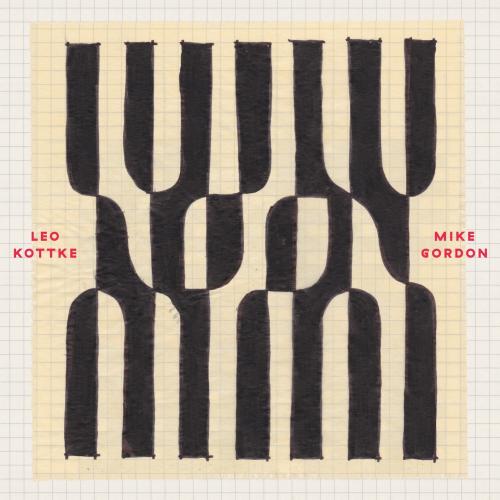
Album Info
Album Veröffentlichung:
2020
HRA-Veröffentlichung:
05.08.2026
Das Album enthält Albumcover
- 1 Flat Top 02:20
- 2 Eight Miles High 05:16
- 3 I Am Random 03:55
- 4 Noon to Noon 02:54
- 5 From the Cradle to the Grave 03:04
- 6 How Many People Are You 04:01
- 7 Ants 04:40
- 8 Sheets 03:23
- 9 Alphabet St. 04:07
- 10 Peel 04:36
- 11 The Only One 02:47
Info zu Noon
New studio album from acoustic guitar pioneer Leo Kottke and Phish bassist Mike Gordon and their first new album together in 15 years.
Intricate, warmly askew, and indelibly dexterous, NOON showcases 11 remarkable new tracks created by two of the most accomplished and idiosyncratic instrumentalists in American music. The album – which marks Kottke’s first studio record since his previous collaboration with Gordon, 2005’s 66 STEPS – was recorded in New Orleans and Vermont, with music, exchanged between the two artists by file, tape-sealed boombox, sheet music, and face-to-face. Working with longtime Gordon collaborator, producer/engineer Jared Slomoff, Kottke and Gordon have crafted a singular collection of improvisational mood music, including a stripped-back version of Gordon’s classic “Peel” and Kottke’s stark rethinking of the Byrds’ “Eight Miles High.” NOON further includes a bopping cover of Prince’s “Alphabet St.” featuring Phish drummer Jon Fishman, who also joins Kottke and Gordon on four additional tracks. In addition, the LP includes nearly ambient appearances by pedal steel player Brett Lanier (The Barr Brothers) and cellist Zoë Keating (Imogen Heap, Amanda Palmer, Tears For Fears).
“The vibe is very different from the other two albums,” says Gordon. “I was hearing a darkness in the material Leo was bringing, and some of the material that I wanted to bring, that I thought just reflected going through 10 more years of life. There are overdubs, but it’s still more like you’re in a cafe or a living room with these two guys. And even when we had drums, we wanted to maintain that feeling.”
“I just knew there was a shape and that we were following it,” says Kottke. “We were trying to get to that place that we get to in a little room, just chasing each other. We’ve found that at soundchecks, and at my place, or his place, or some motel room. We wanted to get that late-night feel. It’s a more intimate record than the others are, I think there are depths to it.”
Leo Kottke, guitar, vocals
Mike Gordon, bass, vocals
Zoë Keating, cello (track 10)
Jonathan Fishman, drums (tracks 3, 5, 6, 9, 11)
Brett Lanier, pedal steel guitar (track 9)
Jared Slomoff, vocals (tracks 3, 9, 10, 11)
Produced & Engineered & Mixed by Jared Slomoff
Additional Recording by Misha Kachkachishvili at Esplanade Studios, New Orleans and Paul DuGre in California
Mastered by Paul DuGre
Please Note: We offer this album in its native sampling rate of 48kHz, 24-bit. The provided 96kHz version was up-sampled and offers no audible value!
Leo Kottke
Acoustic guitarist Leo Kottke was born in Athens, Georgia, but left town after a year and a half. Raised in 12 different states, he absorbed a variety of musical influences as a child, flirting with both violin and trombone, before abandoning Stravinsky for the guitar at age 11.
After adding a love for the country-blues of Mississippi John Hurt to the music of John Phillip Sousa and Preston Epps, Kottke joined the Navy underage, to be underwater, and eventually lost some hearing shooting at lightbulbs in the Atlantic while serving on the USS Halfbeak, a diesel submarine.
Kottke had previously entered college at the U of Missouri, dropping out after a year to hitchhike across the country to South Carolina, then to New London and into the Navy, with his twelve string. “The trip was not something I enjoyed,” he has said, “I was broke and met too many interesting people.”
Discharged in 1964, he settled in the Twin Cities area and became a fixture at Minneapolis’ Scholar Coffeehouse, which had been home to Bob Dylan and John Koerner. He issued his 1968 recording debut LP Twelve String Blues, recorded on a Viking quarter-inch tape recorder, for the Scholar’s tiny Oblivion label. (The label released one other LP by The Langston Hughes Memorial Eclectic Jazz Band.)
After sending tapes to guitarist John Fahey, Kottke was signed to Fahey’s Takoma label, releasing what has come to be called the Armadillo record. Fahey and his manager Denny Bruce soon secured a production deal for Kottke with Capitol Records.
Kottke’s 1971 major-label debut, “Mudlark,” positioned him somewhat uneasily in the singer/songwriter vein, despite his own wishes to remain an instrumental performer. Still, despite arguments with label heads as well as with Bruce, Kottke flourished during his tenure on Capitol, as records like 1972’s “Greenhouse” and 1973’s live “My Feet Are Smiling” and “Ice Water” found him branching out with guest musicians and honing his guitar technique.
With 1975’s Chewing Pine, Kottke reached the U.S. Top 30 for the second time; he also gained an international following thanks to his continuing tours in Europe and Australia.
His collaboration with Phish bassist Mike Gordon, “Clone,” caught audiences’ attention in 2002. Kottke and Gordon followed with a recording in the Bahamas called “Sixty Six Steps,” produced by Leo’s old friend and Prince producer David Z.
Kottke has been awarded two Grammy nominations; a Doctorate in Music Performance by the Peck School of Music at the U of Wisconsin, Milwaukee; and a Certificate of Significant Achievement in Not Playing the Trombone from the U of Texas at Brownsville with Texas Southmost College.
Mike Gordon
is bassist and co-founder of the seminal improvisational rock band Phish. His sixth solo LP, Flying Games, is filled with constant and wildly hypnotic movement, each moment animated by unexpected sounds that morph and expand and spin off into their own strange orbits, revealing entirely new dimensions of the kaleidoscopic musicianship he’s displayed as a bassist for the last four decades.
In creating such a mesmerizing body of work, the Vermont-based musician spent months writing and recording in his home studio (including much of 2020’s lockdown), immersing himself in sonic experiments ranging from the playfully spontaneous (constructing beats by banging wrenches against various pieces of farming equipment) to the hyper-specific and technical (programming a keyboard with chords sampled from’50s-era Hawaiian guitar records). Revealing entirely new dimensions of the kaleidoscopic musicianship he’s displayed as Phish’s bassist for the last four decades, the result is a work of both extraordinary vision and daring execution.
“As someone who comes from a world of telepathic improvisation, the idea of one person layering sounds alone in a room might seem a bit against the mythos,” says Gordon, who names Stevie Wonder’s largely self-contained approach on his classic 1972 album Talking Book as a touchstone for Flying Games. “But with this record I didn’t want to work in that traditional way of going into a studio with a band and recording for two weeks; I wanted to take my time and explore, and really go deep into the fabric of the music to see what we could find.”
Produced by Gordon, recorded by longtime collaborator Jared Slomoff, and mixed by six-time Grammy-winning engineer Shawn Everett (Alabama Shakes, The War on Drugs), Flying Games first took shape as Gordon and Slomoff met for daily sessions at Megaplum (the make-shift studio Gordon built from an old farmhouse on his property). As the songs became more fully formed, Gordon brought in contributions from his bandmates: drummer John Kimock, keyboardist Robert Walter, percussionist Craig Myers, and guitarist Scott Murawski.
“All of my bandmates sent in parts they’d recorded from afar, with multiple takes for their parts—for example, Scott would often share 20 tracks of guitar for just one song,” says Gordon, who plays bass, guitar, and keyboards on the album. “They were all working in an experimental way too, and then Jared and I would decide how to go about weaving in what they’d each created.”
In keeping with the eclectic sensibilities that informed past work like 2020’s Noon (a collaborative album made with acoustic-guitar luminary Leo Kottke) and 2017’s OGOGO (a pop-inspired solo effort produced by Everett), Flying Games imbues elements of everything from disco and dancehall to psych-folk and funk into Gordon’s unfettered and expansive breed of rock music. But despite endlessly evolving into new rhythms and textures and sonic patterns, the album remains firmly grounded in Gordon’s unaffected yet joyfully idiosyncratic songwriting. “One of the great things about taking so much time to make this record was that we could load the songs up as much as we wanted, then ratchet them back to cut right to whatever emotion inspired the song,” he says.
As Gordon reveals, the title to Flying Games nods to a recurring phenomenon within his experience in dreaming. “I have a lot of dreams about flying in general, but I’ve realized that in my dreams I tend to start flying right away—usually either to get to someone or be part of a situation that’s calling to me in some way, or sometimes to escape,” he says. “There’s always an emotional element to it, and this album ended up containing a bunch of songs alluding to that feeling. At the same time the title’s meant to be a celebration of life, and that ability to let loose and take flight.”
On the album-opening “Tilting,” Flying Games immediately draws the listener into its otherworldly atmosphere., The track takes on a dizzying velocity thanks to its staccato basslines and syncopated drumbeats, intensifying that momentum as Gordon speaks to the odd thrill of losing all composure. “That song is about being in a situation or a relationship where you don’t know if your footing is solid—but then accepting that and realizing you enjoy the feeling of disorientation,” says Gordon. “Whether it’s playing music or driving or experiencing something new, I’ve always felt more present when I don’t know where I’m going next.” In a moment emblematic of the album’s infinite twists and turns, “Tilting” ends on a fast-shifting profusion of textures and grooves.
A prime example of the unbounded creativity that fueled all of Flying Games, “Mull” came to life through a series of free-flowing but highly intentional musical experiments. After Murawski urged him to write a harder-hitting rock song, Gordon laid down a demo he soon adorned with such details as the industrial-edged beats he’d built by banging wrenches on tractors in his garage. But when it came time for the mixing process for “Mull,” Everett completely restructured the song by analyzing the architecture of Stevie Wonder’s “Higher Ground.”
“‘Higher Ground’ has nothing to do with ‘Mull,’ but Shawn used it as a reference for organizing the tracks or cuing certain instruments,” says Gordon. “He’s a real visionary and has so many ways of pulling himself out of his comfort zone, which all ties into my overall goal of creating a very unique layering of sounds.” As they reassembled the song, the musicians added in frenetic guitar work and merry-go-round-esque organ melodies and Theremin-like synth tones—a potent backdrop to Gordon’s ruminations on some of the more challenging aspects of human connection. “I’ve gotten more decisive as I’ve gotten older, but that song is partly about being wish-washy in situations where you’re not sure how to deal with someone who’s frustrating you,” he says. “It’s also got that moment of elation when you realize you actually don’t need that person, and you can go ahead and move on with your life.”
A stark contrast to the moody urgency of “Mull,” “Sughn Never Sets” embodies a transcendent quality that stems in part from Gordon’s use of artfully preserved fragments of live recordings. “When you’re in the middle of a jam at a show, or even just at rehearsal or sound check, there are things that happen subconsciously—almost as if the music is playing itself, like a Ouija board,” he says. Featuring elements of two live jams from two different years, “Sughn Never Sets” encompasses a vast mosaic of sounds (shimmering bells, kinetic percussion, a gloriously explosive guitar solo) while offering up an exquisitely simple reflection on gratitude for life’s smallest pleasures. “It starts off with me feeling alone and lost, but then moves into realizing that I can stay out all night and enjoy the moment for what it is,” he says. “I ended up referencing Radio Bean, which is this little bohemian club in Burlington that’s got a lot of incredible experimental music coming in. I’ve discovered so much great new music from hanging out there, and I’m really thankful that they’re still going strong.”
Referring to the making of Flying Games as a “slow and loving process,” Gordon hopes that the album might foster the same sense of exuberant communion that infuses songs like “Sughn Never Sets.” “Maybe someday I’ll make a melancholy, more contemplative album, but this time I really wanted to create something that people can crank up when they’re hanging out with friends—something that can be the soundtrack to a raging good time.”
Dieses Album enthält kein Booklet