





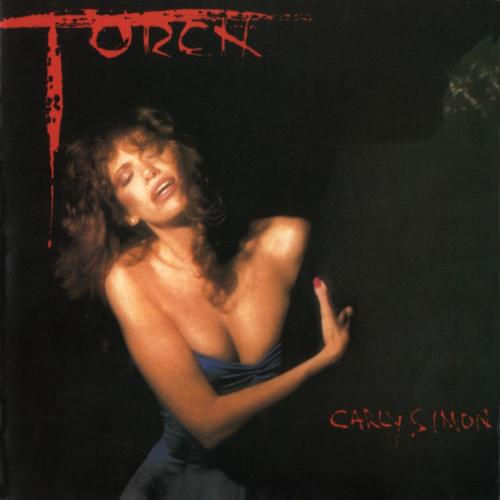
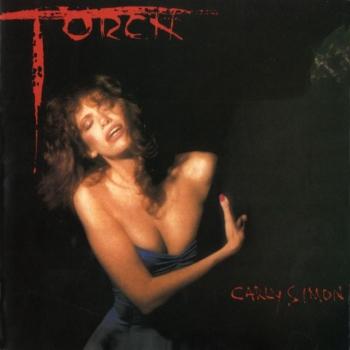
Torch (Remastered) Carly Simon
Album Info
Album Veröffentlichung:
1981
HRA-Veröffentlichung:
17.01.2017
Label: Rhino/Warner Bros., Rhino Records
Genre: Electronic
Subgenre: Downtempo
Interpret: Carly Simon
Das Album enthält Albumcover
Entschuldigen Sie bitte!
Sehr geehrter HIGHRESAUDIO Besucher,
leider kann das Album zurzeit aufgrund von Länder- und Lizenzbeschränkungen nicht gekauft werden oder uns liegt der offizielle Veröffentlichungstermin für Ihr Land noch nicht vor. Wir aktualisieren unsere Veröffentlichungstermine ein- bis zweimal die Woche. Bitte schauen Sie ab und zu mal wieder rein.
Wir empfehlen Ihnen das Album auf Ihre Merkliste zu setzen.
Wir bedanken uns für Ihr Verständnis und Ihre Geduld.
Ihr, HIGHRESAUDIO
- 1 Blue Of Blue 03:40
- 2 I'll Be Around 02:33
- 3 I Got It Bad And That Ain't Good 03:48
- 4 I Get Along Without You Very Well 03:28
- 5 Body And Soul 04:15
- 6 Hurt 03:27
- 7 From The Heart 02:49
- 8 Spring Is Here 03:05
- 9 Pretty Strange 03:01
- 10 What Shall We Do With This Child 02:47
- 11 Not A Day Goes By 02:41
Info zu Torch (Remastered)
„Torch“ features Simon's versions of jazz and blues songs from the 30's and 40's, along with one original song ("From The Heart").
Possibly stinging from criticism of her new wave-ish Come Upstairs“, Carly Simon followed that album with 1981's „Torch“, a surprising and lovely collection of torch songs, old jazz standards, and Broadway melodies. Simon wrote only one of the album's 11 songs, "From the Heart," and did a wise job of choosing the others.
Most collections of this ilk stick to the tried and true, and while there are a few somewhat obvious selections, such as "I Get Along Without You Very Well" and "Body and Soul," for example, Simon wisely focuses on lesser-known wonders like Alec Wilder's "I'll Be Around" and Stephen Sondheim's "Not a Day Goes By." The arrangements use a small jazz combo and tasteful orchestrations to support the songs without smothering them. Never merely retro or sentimental, „Torch“ is a jazzy adult-pop delight.
„Carly Simon's Torch is a gorgeous throwback to the Fifties and early Sixties, when pop music divas and crooners routinely released two or three albums a year, each record utilizing a full studio orchestra instead of session musicians. The typical pop LP of that era was a high-toned vocal showcase, with moody orchestrations that refined the romantic movie music of the time into an intimate background style. Until now, the only rock singer who's really embraced this genre has been Harry Nilsson. On 1973's A Little Touch of Schmilsson in the Night, Nilsson sang a bevy of standards, beautifully arranged by Gordon Jenkins, with impressive fluidity.
Torch easily eclipses A Little Touch of Schmilsson in the Night, however, because it transcends nostalgia. By blending old and new material, and by incorporating a hint of jazz-fusion music into a studio-orchestra sound, Simon and her producer, Mike Mainieri, begin to suggest a continuity between Fifties torch and Eighties pop.
Since it doesn't try to titillate us with marital confessions or strain to be trendy, Torch is also the first album on which Carly Simon the pop celebrity doesn't interfere with Simon the pop artist. The focus is squarely on the music, and the singer's magnificent alto, with its rough-and-tumble lows and wistful highs, has never sounded better. Five of the LP's eleven numbers ("I'll Be Around," "Body and Soul," "Spring Is Here," "I Get Along without You Very Well," "I've Got It Bad and That Ain't Good") have been covered often enough to acquire the status of popular art songs. Simon does these evergreens proud in low-keyed, elegantly heartfelt versions that owe more to emotional tone than they do to finger-snapping swing. Though Carly Simon acknowledges the swinging, bigband style of Frank Sinatra, Ella Fitzgerald and others through her carefully syncopated phrasing, she basically performs the compositions with an art singer's awareness: i.e., elocution and timbre, rather than rhythm, prevail.
Whereas most vocalists treat the flat-out irony of Hoagy Carmichael's "I Get Along without You Very Well" with varying degrees of coyness, Simon plays the lyrics for straightforward drama–as a rejected lover attempting to stifle her feelings in a face-to-face confrontation. The star delivers Alec Wilder's "I'll Be Around," which is usually milked for its masochistic pathos, as a matter-of-fact vow of fidelity to a straying sweetheart. In the disc's dreamiest performance, "Spring Is Here," Simon turns Rodgers and Hart's ballad of abject despair into a sensuous mood piece.
Mike Mainieri's settings, which spotlight exceptionally rich orchestrations by Marty Paich and Don Sebesky, sound custom-made to enhance Carly Simon's aesthetic, albeit powerful, approach. And the standards are nicely balanced by some newer, less familiar numbers. Nicholas Holmes' "Blue of Blue" scores as an effective vocal tone poem, while Holmes and Kate Horsey's "What Shall We Do with the Child" is a poignant vignette about an expendable "love child." (Both songs boast additional lyrics by Simon.) The singer slinks through "Pretty Strange," a Jon Hendricks-Randy Weston Fifties jazz tune, like an Eighties Julie London. A revival of Timi Yuro's hit, "Hurt," provides a rock change of pace. Simon's one original, the acoustic "From the Heart," links torch style to the singer/songwriters of the Seventies.
Torch's moment of truth is Stephen Sondheim's "Not a Day Goes By," from the new musical Merrily We Roll Along. Sondheim rarely writes compositions that are concise enough to engage the pop mainstream, but this big, direct ballad is a fantastic exception, and Simon knows exactly what to do with it. "But I just go on thinking and sweating/And cursing and crying/And turning and reaching/And waking and dying" goes Sondheim's wonderful lyric, which details the physical anguish of living through a romantic breakup. Carly Simon's vocal makes you feel each stab of pain.
Though Torch may be too sophisticated to storm the charts, it's nevertheless a superb example of modern mood music, performed with grace, gusto, sensuality and intelligence.“ (Rolling Stone)
Carly Simon, vocals
Jay Berliner, guitar
Hugh McCracken, guitar
David Nadien, violin
Phil Woods, alto saxophone
Michael Brecker, tenor saxophone
Randy Brecker, trumpet
Mike Mainieri, piano, vibes, marimbas
Warren Bernhardt, piano, synthesizer
Anthony Jackson, bass
Eddie Gomez, bass
Rick Marotta, drums
Grady Tate, drums
Jerry Marotta, drums
Recorded 1981 at Power Station Studios, New York City
Produced by Mike Mainieri
Digitally remastered
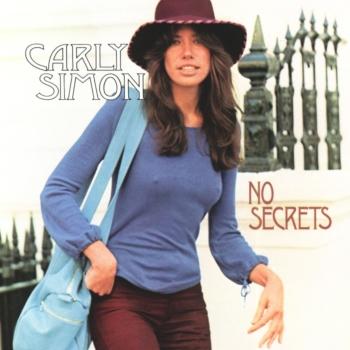
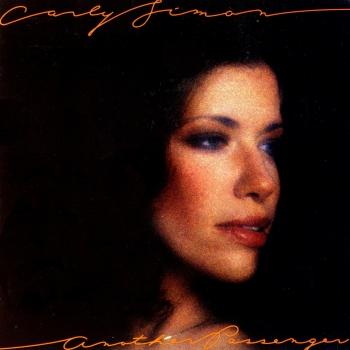

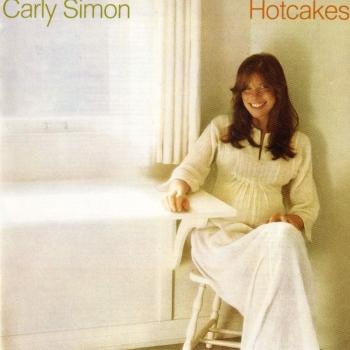
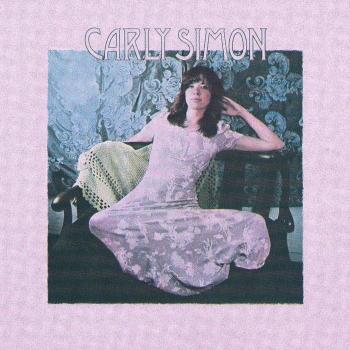
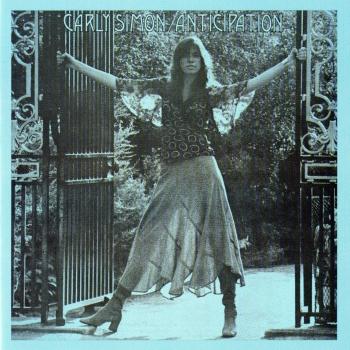
Carly Simon
Carly’s body of work encompasses a significantly wide spectrum of activity. In addition to having recorded 22 concept albums of her own compositions, she has composed four film scores, including Heartburn, This Is My Life, Postcards from the Edge and Working Girl, for which she won a GRAMMY, a Golden Globe Award and an Oscar. Simon has also written four successful children's books for Doubleday, including her most recent, The Nighttime Chauffeur. The most far-reaching of her accomplishments is the opera, Romulus Hunt, for which she was commissioned jointly by The Metropolitan Opera Guild and The Kennedy Center. The co-production was performed both in New York and Washington. Referring to the opera, a recent review in CD Magazine states, "Here is a genuinely beloved artist, with years of popularity, with a vast public that American opera composers would kill for, bringing that public to opera with an ease few composers can match."
Carly Simon was born in New York City, the third of four children born to Richard and Andrea Simon. Richard Simon, the founder of Simon and Schuster, was also a pianist and Andrea Simon was a civil-rights activist as well as a singer. All four children were raised in an atmosphere conducive to self-expression. All three girls became musicians: Joanna, the eldest, a prominent opera singer and television personality; Lucy a two-time GRAMMY winner for her children's album; Peter, the only son in the Simon family, is a successful photographer.
Lucy and Carly Simon, while enrolled in Sarah Lawrence College, sang professionally for three years as The Simon Sisters, and scored a hit single record of Lucy's song, "Winkin', Blinkin' and Nod," on Kapp Records. When Lucy married, Carly began singing and writing on her own. Her debut album, Carly Simon on Elektra Records, was released in 1971 and included the single, "That's the Way I've Always Heard It Should Be." The album resulted in her first GRAMMY for Best New Artist. Following this release came an unbroken string of songs, all of which were to become classics with memorable but quirky melodies and personal, literate lyrics. The list includes songs like "Anticipation," "You're So Vain," "Loving You Is the Right Thing To Do," "Haven't Got Time for the Pain," "Mockingbird" (with James Taylor), "Jesse," "Coming Around Again," "Give Me All Night," "The Stuff That Dreams Are Made Of" and "Let the River Run (Theme from Working Girl)," among others.
Because Simon grew up in a household where show music and jazz was played along with classical, pop and folk, she wanted to do an album of her own favorite standards. The result was 1981's Torch. The album proved to be a sleeper and took Warner Bros. Records, to whom she was signed at the time, totally by surprise. Because of her acceptance in this genre, she convinced Clive Davis, President of Arista Records to do another jazz/standard album, My Romance, released in 1990. An HBO special was produced and aired in conjunction with the album. One of the songs from this collection, "In the Wee Small Hours of the Morning," was featured in the smash soundtrack album for the film, Sleepless in Seattle, on Epic Records.
During the 1990’s, all of Simon's albums have been released on Arista, with the exception of the This Is My Life soundtrack on Quest/Reprise and Romulus Hunt, which will appear on Angel. She is also represented on the current Frank Sinatra Duets album, with two wonderful performances, "In the Wee Small Hours of the Morning" and "Guess I'll Hang My Tears Out to Dry." She also recorded a song for the album of music by the Gershwin's, produced by George Martin.
Carly Simon was married to James Hart, who was a writer, and has two children, Sally and Ben by her former husband, James Taylor.
Dieses Album enthält kein Booklet